Wag & Ride
Dog Car Travel FAQs
The law, choosing and fitting, use and care, and orders & delivery - answered.
The Highway Code Rule 57 says dogs must be "suitably restrained so they cannot distract the driver, or injure you or themselves, if you stop quickly." It's not a direct offence, but an unrestrained dog can mean a careless-driving charge, a fine, points, and an invalid insurance claim after an accident. A crash-tested harness + tether, a car seat with a tether, a hammock, or a boot with a dog guard all count.
Both are accepted forms of restraint. A well-fitted harness clipped to the seat-belt is the most practical for most cars and doubles as a walking harness. A crate or the boot with a rigid dog guard is arguably better for a large dog if you have the space. What is NOT safe: a lead clipped to a collar (neck injury risk) or nothing at all.
Yes, with a boot liner to protect the car and ideally a dog guard between the boot and the cabin, plus a cargo tether so the dog can't be thrown forward. Estates and SUVs suit this best. Add a ramp for an older dog.
It's legal if the dog is restrained and the passenger airbag is switched off - an airbag can seriously injure a dog. The back seat or boot is safer. If you do use the front, slide the seat fully back.
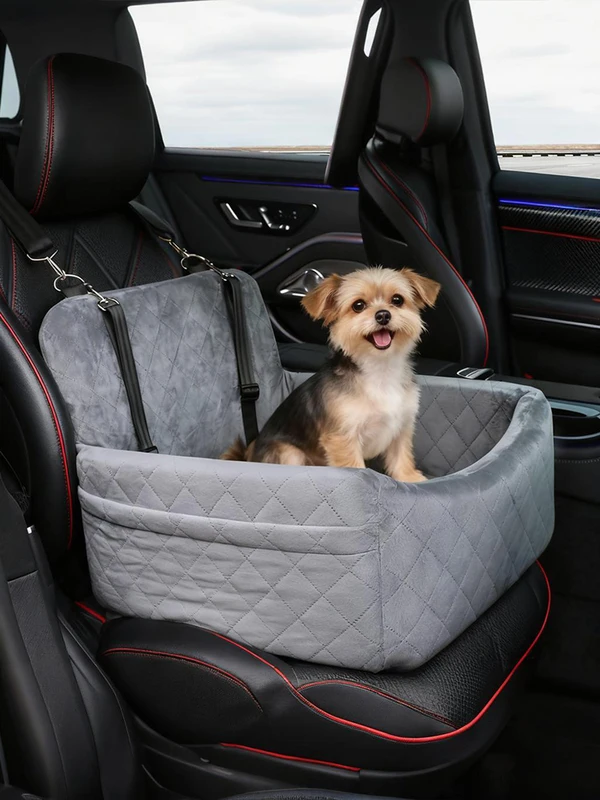
It's about where your dog rides. Back seat, wants to see out and settle: a booster car seat. Back seat, you just want the car protected: a full-bench hammock. Boot: a boot liner. All three should be used with a harness and tether.
Measure the chest girth - the widest point just behind the front legs - with a soft tape. Our sizes: S 40-56cm, M 52-70cm, L 66-86cm, XL 82-104cm. If you're between sizes, go up. You should get two fingers under any strap.
Our liners are a universal shape and trim-to-fit with scissors. Choose Standard for a hatchback or saloon boot, XL for an estate, SUV or 4x4. Measure your boot floor length and width first.
The full hammocks have a zipped centre opening so you can feed a seat-belt through for a middle passenger or an ISOFIX child seat. The slim bench protector fits around a child seat without the zip.
Yes - a raised booster seat so they can see the horizon often reduces motion sickness, and so does a calm, restrained position rather than pacing. See our car sickness & anxiety guide.
Covers and hammocks machine-wash at 30°C and line-dry - don't tumble dry the waterproof backing. Boot liners wipe clean, hose off, or machine wash depending on the model (see each product page). Fold everything flat between trips.
No. Everything anchors to the head-rest posts and the seat-belt buckle - no adhesive, no screws, no permanent marks. The ramps have rubber feet and a lip that hooks over the boot sill without scratching.
The harnesses, ramps and 5-layer liners are built for years of daily use. The lighter covers and slim protectors are 1-3 season items for occasional travellers. Each product page says which.
Free on UK orders over £40, otherwise a flat £3.95. Dispatched from the UK in 1-3 working days by tracked courier; most orders arrive within 2-4 working days. Highlands, islands and NI may take a little longer.
30 days. If it doesn't fit your car or your dog won't use it, send it back unused (or clean and as-new) for a full refund of the item price. See Returns & Cancellations.
Not at the moment - we ship to UK addresses only, including the Highlands, islands and Northern Ireland.
Email us within 30 days with a photo and your order number and we'll replace it or refund you, including return postage, under the Consumer Rights Act 2015.